
Welcome to the world of day trading! It's a fast-paced environment where quick decisions and smart strategies can lead to profits. But let's be real, it's not always easy. You need the right tools, a solid plan, and a good handle on managing risks. This guide, your go-to day trading strategies PDF, is here to help you build that foundation. We'll break down the key approaches, the tech you'll need, and how to stay safe while you trade. Think of it as your roadmap to navigating the markets with more confidence.
Key Takeaways
- Mastering core day trading strategies like momentum investing, trend following, and hybrid approaches is vital for success. Understanding these methods helps you identify profitable opportunities.
- Essential tools such as technical indicators, chart patterns, and historical market data analysis are critical for making informed trading decisions and spotting trends.
- Effective risk management, including money management principles, stop-loss orders, and portfolio diversification, is paramount to protect your capital and ensure long-term viability.
- Advanced day trading approaches, like data-based strategies and algorithmic trading, can offer a competitive edge by leveraging technology and quantitative analysis.
- Developing your unique trading edge through backtesting, documenting trades, and avoiding common biases is key to consistent profitability and overcoming market challenges.
Understanding Core Day Trading Strategies
Day trading involves buying and selling securities within the same trading day. This approach is characterized by its rapid pace and requires active participation from the trader. To succeed, traders need a solid grasp of various strategies that can help them capitalize on short-term market movements. Let's explore some of the most common and effective approaches.
Magnetizing Momentum Investing
Momentum investing is all about riding the wave. The core idea is that assets showing a strong upward or downward trend are likely to continue in that direction for a while. Traders who use this strategy look for assets that are already moving significantly, betting that this movement will persist. It requires keeping a close eye on market news and being ready to act fast when opportunities arise. Patience is key, though; jumping in or out too quickly based on minor price swings can lead to mistakes. It's a strategy that has shown consistent results across different markets, making it a popular choice for many.
Trend Following Techniques
This strategy is pretty straightforward: if a price is going up, you buy, expecting it to keep going up. If it's going down, you sell, anticipating further declines. Trend followers often use tools like moving averages and trend lines to spot these movements. They also tend to be patient, understanding that trends can take time to develop and play out. While it might not offer the same adrenaline rush as other methods, trend following can provide a more stable path, especially for those new to day trading. It's about identifying the prevailing direction and aligning your trades with it.
Hybrid Strategies
As the name suggests, hybrid strategies mix and match elements from different trading approaches. This offers flexibility for traders who want to combine the strengths of various methods. The trick here is to make sure all the parts of your strategy work well together and that you're comfortable executing each component. A well-crafted hybrid strategy should also fit your personal trading goals and how much risk you're willing to take. Experimenting with different strategies and finding what clicks for you is part of the journey. It's about building a personalized system that suits your style and objectives. For traders looking to refine their approach and potentially find an edge, exploring platforms that offer advanced analytics, like those found with Lune Trading, can be a smart move.
Essential Tools for Day Trading Success
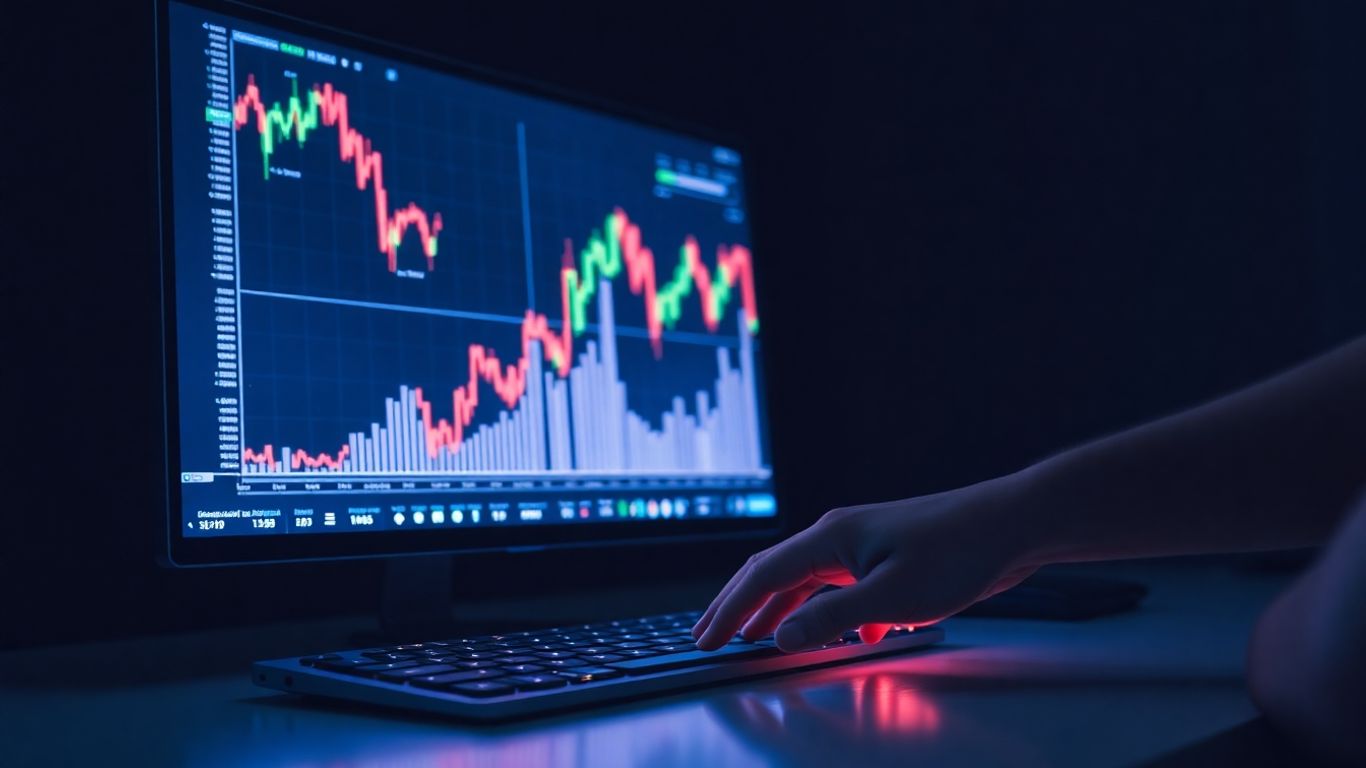
To really make headway in day trading, you need the right gear. It's not just about having a hunch or a lucky guess; it's about using tools that give you an edge. Think of it like a carpenter needing a good saw and hammer – traders need their own set of instruments to work with. These tools help you see what's happening in the market more clearly and make smarter moves.
Leveraging Technical Indicators
Technical indicators are like a trader's crystal ball, but instead of magic, they use math based on past price and volume data. They help you spot trends, figure out if a stock is overbought or oversold, and even predict where prices might go next. It's not about knowing the future, but about using historical patterns to make educated guesses. Some popular ones include:
- Moving Averages: These smooth out price action over a set period, showing you the general direction a stock is heading. You can use simple moving averages (SMA) or exponential moving averages (EMA) which give more weight to recent prices.
- Relative Strength Index (RSI): This measures the speed and change of price movements. A reading above 70 often suggests a stock is overbought, while below 30 can mean it's oversold.
- MACD (Moving Average Convergence Divergence): This indicator shows the relationship between two moving averages, helping to spot momentum shifts and potential trend changes.
Using these indicators can really help you time your entries and exits better. It's about finding what works for you and integrating it into your trading plan. For traders looking to refine their use of these tools, exploring resources on data-based trading strategies can offer deeper insights.
Understanding Chart Patterns
Charts are where the action happens, and certain patterns on these charts can tell a story about what traders are thinking and doing. Recognizing these patterns can give you a heads-up on potential price movements. Some common ones include:
- Head and Shoulders: Often signals a trend reversal.
- Double Tops and Bottoms: Also indicate potential trend reversals.
- Triangles (Ascending, Descending, Symmetrical): These can suggest a continuation of the current trend or a potential breakout.
Learning to spot these patterns takes practice, but they can be incredibly useful for predicting where a stock might go next. It’s like learning a secret language of the market.
Analyzing Historical Market Data
Looking at what happened in the past is a big part of figuring out what might happen in the future. Historical market data is like a treasure trove of information. By studying past price movements, trading volumes, and how different assets reacted to news, you can start to see recurring themes. This analysis helps you understand market psychology – the fear and greed that drive prices. It's not about finding a magic formula, but about building a better sense of how markets typically behave under certain conditions. This kind of deep dive into past performance can really inform your current decisions and help you avoid repeating past mistakes.
Mastering Risk Management in Day Trading
Trading, especially day trading, can feel like a rollercoaster. You have your ups and downs, and sometimes it feels like you're just along for the ride. But here's the thing: successful traders aren't just lucky; they're smart about protecting their money. Risk management is your shield and sword in this game. It's not about avoiding losses altogether – that's impossible. It's about making sure that when you do lose, it's a small, manageable hit, not a knockout blow to your account.
Effective Money Management Principles
Think of your trading capital as your lifeblood. You wouldn't just hand it out, right? Effective money management is all about setting rules for how you use that capital. It's the difference between being a calculated investor and a gambler throwing money around. The core idea is to never risk too much on any single trade.
Here are some basic rules to live by:
- Position Sizing: This is huge. Don't put 50% of your account into one trade. A common guideline is to risk only 1-2% of your total trading capital per trade. If you have $10,000, that's $100-$200 max risk per trade.
- Risk-Reward Ratio: Always look for trades where the potential profit is significantly larger than the potential loss. A 1:2 or 1:3 ratio (meaning you risk $1 to make $2 or $3) is a good target.
- Avoid Chasing Losses: If a trade goes against you, don't immediately jump into another one to
Advanced Day Trading Approaches
Beyond the standard methods, there are more sophisticated ways traders try to get ahead. These often need better tools and a deeper grasp of how markets work. Think of these as the next step up from just following trends or betting on prices returning to normal. Many traders are now looking at ways to use technology to their advantage, and this is where things get really interesting.
Data-Based Trading Strategies
In today's world, with so much information available, you can really boost your chances of making steady profits by using data-based trading strategies. This modern approach uses real-time statistical data not just to guess what the market might do, but also to make trades more accurately and easily. Whether you're a pro or just starting out, adding data-driven trading to your plan could be a big change. You'll see how data insights can change how you view the market, sharpen your strategies, and increase your portfolio's returns with consistent profits. We'll look at the tools you need and the potential profits you could see. Your financial interests are about to take an exciting turn into a world driven by smart algorithms, historical simulations, and objective reliability. Welcome aboard this enlightening journey where numbers fuel profit – a peek into trading's future that you can experience today.
Algorithmic Trading Fundamentals
So, you're curious about algorithmic trading? It's basically using computers to make trades for you. Instead of you sitting there watching the market and clicking buttons, a program does it based on rules you set. This guide is here to break down how it all works. We'll look at different ways to trade using algorithms, how to build your own, and what you need to watch out for. Think of it as a roadmap for anyone wanting to get into this automated trading world. At its core, algorithmic trading follows a pretty straightforward path. You start with an idea, a hunch about how the market might behave. Then, you turn that idea into a concrete trading strategy. This isn't just a vague notion; it's a set of rules. Finally, you translate those rules into code – an algorithm – that a computer can understand and execute. It's a bit like giving a very precise set of instructions to a super-fast, emotionless assistant. The goal is to find an edge, something that gives you a slight advantage, and then code it into a strategy that can consistently make trades. This is where the real work begins. Building a profitable algorithmic trading strategy isn't a walk in the park. It requires a blend of market insight, analytical thinking, and solid programming skills. Many traders spend years refining their approach, constantly learning and adapting. You'll need to understand how financial markets tick and be able to crunch numbers. This is where the real work begins.
Sentiment Analysis in Trading
When it comes to staying ahead of the curve, understanding sentiment is important. A significant part of the trading world, sentiment analysis, or opinion mining, involves looking at views and emotions surrounding a particular stock or financial instrument. The beauty of sentiment analysis is that it can provide consistent returns with low volatility. By measuring the mood of the market, traders can get a pulse on how the wind is shifting and make informed decisions. Sentiment analysis takes into account social signals, news trends, and overall market vibes, helping you to anticipate market movements before they become obvious from price action alone. For instance, a sudden surge in positive news about a company might indicate a potential upward price movement, while widespread negative sentiment could signal a coming downturn. This approach, when combined with other analytical methods, can offer a more complete picture of market dynamics. Many traders find that using tools that track social media trends and news headlines can provide an edge. For those looking to explore more advanced tools and strategies, services like Lune Trading can offer AI-powered solutions to help level the playing field.
Developing Your Trading Edge

Finding your unique advantage in trading isn't about luck; it's about building a system that works for you. Think of it like having a special skill that sets you apart. This could be anything from spotting chart patterns others miss to understanding a specific industry really well. The key is to identify what you do better than most and then build your strategy around that.
To really nail this down, you need to do a couple of things. First, you have to test your ideas rigorously. This means looking back at past market data to see if your strategy would have actually made money. It's like practicing a sport before a big game. You wouldn't just show up and hope for the best, right? You'd train, you'd drill, you'd analyze your performance. Trading is no different.
Here's a breakdown of how to build that edge:
- Define Your Unique Advantage: What makes you different? Is it your speed, your analytical skills, or your knowledge of a niche market? Figure this out first.
- Backtesting and Documenting Trades: This is where the real learning happens. You need to test your strategies on historical data and keep a detailed record of every trade you make. This helps you see what's working and what's not.
- Avoiding Common Trading Biases: We all have biases. Maybe you love a certain stock or hate another. Recognizing these biases is the first step to overcoming them so you can make objective decisions.
Developing a trading edge is an ongoing process. It requires self-awareness, a commitment to learning, and the discipline to stick to your plan. Don't expect overnight success; focus on consistent improvement and refining your approach. It's about building a sustainable method that fits your personality and goals.
Many traders find that using advanced tools and platforms can help them refine their edge. For instance, platforms that offer real-time data and analysis can be incredibly useful. Some traders even explore options like those offered by Lune Trading, which focus on providing data-driven insights and tools that can help traders identify opportunities and manage risk more effectively. This kind of support can be instrumental in developing and maintaining that competitive advantage in the fast-paced trading environment.
Navigating Trading Obstacles
Trading isn't always smooth sailing. Even with a solid strategy, you'll bump into challenges. Think of it like learning to ride a bike; you're going to wobble and maybe even fall a few times. The key is getting back up and figuring out what went wrong. This section is all about facing those inevitable bumps in the road and coming out stronger on the other side.
Building Comprehensive Market Knowledge
Knowing the markets inside and out is your first line of defense. It's not just about memorizing stock prices; it's about understanding the forces that move them. This means keeping up with economic news, understanding how different industries work, and even keeping an eye on global events. The more you know, the less surprised you'll be when the market does something unexpected. It's like having a weather forecast before you set sail – you can prepare for the storm.
Maintaining Trading Discipline
This is a big one. It's so easy to get caught up in the excitement or panic of the moment. You might have a plan, but then a stock suddenly drops, and you sell in fear. Or maybe a stock is soaring, and you jump in without thinking, chasing the trend. Discipline means sticking to your plan, even when your gut is telling you something else. It's about having rules and following them, no matter what.
Here are a few ways to build that discipline:
- Write down your trading plan: What are your entry and exit points? What's your risk tolerance for each trade?
- Review your trades regularly: Look at both your wins and losses. What worked? What didn't? Be honest with yourself.
- Avoid impulsive decisions: If you feel an urge to make a trade outside your plan, take a break. Step away from the screen for a bit.
Sticking to your trading plan is like having a map in unfamiliar territory. It might not show you every single pothole, but it keeps you generally headed in the right direction.
Addressing Trade Restrictions and Regulations
Finally, you've got to know the rules of the game. Different markets and different brokers have their own restrictions. For instance, some platforms might limit how many trades you can make in a day, or there might be specific rules about trading certain types of assets. Staying on top of these regulations is important to avoid any nasty surprises or penalties. It's also where services like Lune Trading can help, offering tools and insights that align with regulatory frameworks, making it easier for traders to operate within the established boundaries. Understanding these logistical aspects is just as vital as understanding chart patterns.
Trading can be tough, with many hurdles to jump over. Don't let common problems stop you from reaching your goals. We've got tools to help you get past these challenges. Want to learn how to trade smarter and avoid pitfalls? Visit our website today to discover solutions that can make a real difference in your trading journey. Check out our AI-powered trading tools for a smoother ride.
Wrapping It Up: Your Day Trading Journey Ahead
So, we've covered a lot of ground in this guide, from understanding the market's rhythm to picking strategies that might just work for you. Remember, day trading isn't a get-rich-quick scheme; it's more like learning a craft. It takes practice, patience, and a willingness to learn from both the wins and the losses. Don't expect to be a pro overnight. Start small, stick to your plan, and keep learning. The market's always changing, so staying curious and adaptable is key. This PDF is just the start, a tool to help you build your own path. Keep refining your approach, manage your risks wisely, and most importantly, trade smart. Good luck out there!
Frequently Asked Questions
What are the main types of day trading strategies?
Day trading involves several popular strategies. You've got momentum investing, where you ride the wave of assets that are moving strongly in one direction. Then there's trend following, which is simpler – you bet that if a stock is going up, it will keep going up, and vice versa. Finally, hybrid strategies mix and match different approaches to fit specific situations and trader preferences.
Why is managing money so important in day trading?
Think of money management as your safety net. Even if you have great trading ideas, without a plan to control how much you bet and how much you're willing to lose on each trade, you could quickly lose all your money. It's not just about making big profits; it's about making sure a few bad trades don't wipe you out.
How can I use technical indicators to help me trade?
Technical indicators are like tools that help you read the market. Things like moving averages show you the general direction of a stock's price, while the RSI can tell you if a stock might be overbought or oversold. By using these indicators, you can get a better idea of when to buy or sell.
What is algorithmic trading?
Algorithmic trading is when you use computer programs to make trades for you. These programs follow specific rules you set, like buying a stock if its price goes up by a certain amount. It's all about making trades faster and without letting emotions get in the way.
How do I find my 'trading edge'?
Your trading edge is what makes you different and better than other traders. It could be your skill in reading charts, your knowledge of a specific industry, or a unique strategy you've developed. To find it, you need to test your ideas, keep records of your trades, and understand why you win or lose.
What are some common problems day traders face, and how can I avoid them?
Traders often struggle with not knowing enough about the market, acting too impulsively, or making emotional decisions. To avoid these, you need to learn as much as you can about how markets work, stick to your trading plan no matter what, and try to make decisions based on facts, not feelings.