
Thinking about how to start trading in 2025? You’re not alone. A lot of people are curious about trading but don’t know where to begin. The good news is you don’t need to be a finance expert to get started. With the right steps, some patience, and a willingness to learn, anyone can try their hand at trading. This guide breaks down the basics in a way that’s easy to follow, even if you’ve never looked at a stock chart before. Let’s walk through what you need to know, from the first steps to building good habits.
Key Takeaways
- Start small and only use money you’re comfortable losing until you understand how trading works.
- Pick a market and broker that match your needs—don’t rush this step, as it affects your whole experience.
- Learn basic trading strategies and tools, but stick to simple ones at first.
- Practice with demo accounts before risking your own cash, so you can make mistakes safely.
- Keep learning, track your trades, and connect with other traders to improve over time.
Understanding the Basics of Trading in 2025
Starting to trade in 2025 feels like jumping into a whole new world, but if you break it down, things get less overwhelming fast. Before placing your first trade, you want to understand how markets work, the different types of places you can trade, and what kinds of assets you’ll be dealing with. Let’s cut through the noise and walk through the core ideas.
Key Concepts Every Beginner Should Know
- Price Movement: At its root, trading is about buying and selling assets based on how you believe prices will move—up or down. If you think a stock will rise, you buy (go long). Expecting a drop? That means selling (or going short).
- Order Types: Trades happen using different order types, like market orders (buy at the current price), limit orders (buy or sell at your chosen price), and stop-loss orders (automatically sell if the price hits a certain point).
- Profit and Loss: Your gains or losses depend on whether your prediction about the price was right. It’s about handling wins and, maybe more importantly, learning to limit your losses.
Here’s a handy table to sum up a few basics:
When you’re learning the ropes, focus on understanding simple market moves and building up from the basics without rushing into complicated trades.
Types of Financial Markets to Explore
There isn’t just one place where trading happens. As a beginner, you’ll want to know where you’re stepping in. Here are some main trading arenas:
- Stock Market: Buy and sell shares of publicly traded companies.
- Forex Market: Trade currencies, usually in pairs, like EUR/USD.
- Commodities Market: Things like oil, gold, or agricultural products get traded here.
- Cryptocurrency Markets: Bitcoin, Ethereum, and other digital coins.
- Bond Market: Debt securities issued by corporations or governments.
Each market has its own hours, risks, and opportunities — for example, day trading carries a very different pace and risk profile than long-term investing in bonds.
Major Asset Classes for New Traders
Picking what you want to trade can feel like wandering in a supermarket with too many options. Here’s a quick rundown of the primary asset classes:
- Stocks: Shares in companies. Great for those wanting equity in a business; vulnerable to headline news.
- Currencies (Forex): For those who like global trends and fast-moving markets.
- Commodities: Physical stuff like gold, oil, and grain. These can move with economic events or disasters.
- Indices: Bundles of stocks (like the S&P 500 or Dow Jones). It’s a way to bet on an entire segment instead of one company.
- ETFs: Funds that track an index, sector, or other assets — trade like a stock but often contain a mix of things.
Don’t feel pressured to try everything. A lot of successful traders stick to just one or two markets until they really understand how each one moves.
If you’re just getting started, take a bit of time reading up on all these basics. Building that foundation keeps you from acting on gut feelings or hype. The most steady traders are the ones who really get the basics down and stay consistent day after day.
Defining Your Trading Goals and Risk Tolerance
Getting started in trading isn't just about picking a stock or currency at random—you need to know what you're actually trying to achieve. Defining your goals and understanding your tolerance for risk will shape every decision you make, from the types of trades you make to how you react when things go wrong (and they will, sometimes). Let’s walk through this process step by step.
Setting Realistic Profit Expectations
Before you even place your first trade, stop and think about what you hope to get out of this experience. Daydreams are fine, but you need a plan grounded in reality.
- Figure out how much money you'd actually like to make—not just your wildest dreams, but what you think is possible.
- Consider how much time you can spend trading each day or week. Less time usually means slower progress.
- Look at average returns for new traders (keep them modest at first) and don’t trust stories about instant millionaires.
Take it slow. Overly high profit targets lead to disappointment, self-doubt, and usually, reckless trades that lose money.
Assessing How Much You Can Afford to Risk
Now for the tough part: deciding how much skin you really want in the game.
- Only use money you can lose without causing yourself stress or trouble—seriously, don’t touch your rent money.
- Work out your ‘risk capital’: savings set aside strictly for trading.
- Think about your reaction to losing money. If a small loss fills you with panic or anger, you're probably risking too much.
- Consider the risk on each trade (often 1-2% of your trading account is common for each position).
Here's a simple breakdown:
Never risk so much on a single trade that one mistake can wipe out your motivation or your account.
Creating a Personal Trading Plan
Writing down your plan feels a little old-school, but it helps you stay focused and less emotional. What should your plan cover?
- Your goals (profit targets and timelines)
- The markets and assets you’ll trade
- How much you’re willing to risk on each trade
- What criteria signal a good trade for you (strategies, setups)
- When to walk away—both if you’re winning or if you’re losing
Keep your plan simple, because if it’s too complicated, you won’t follow it.
In trading, the biggest risks are often the ones you don’t see because you didn’t bother to write down your rules.
Choosing the Best Market and Broker for Your Needs
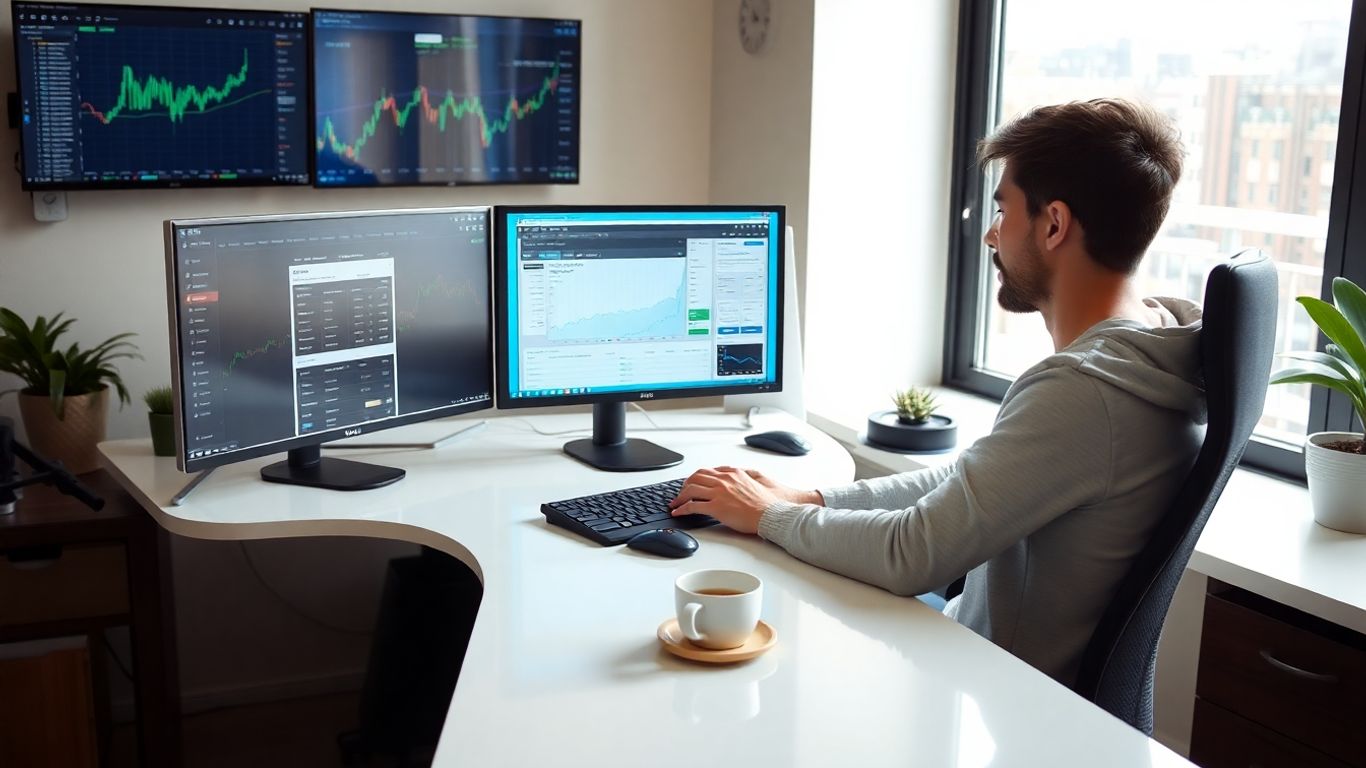
Finding the right market and broker can feel overwhelming. There’s so much noise out there—slick ads, catchy promises, and a flood of websites. But if you’re serious about trading, you need a broker and market that work for you, not just the one with flashy banners. Your choices here affect everything from the fees you pay to your daily trading experience. Let’s break it down and keep things simple.
Comparing Brokerages and Platforms
There are three main types of brokers:
- Full-Service Brokers: They give you personalized financial advice, retirement planning, and help in big financial decisions, but they charge more (sometimes a fee every year or a chunk of your assets). Usually, there’s a high minimum balance, too.
- Discount Brokers: Focused on low cost and simplicity—usually very affordable or commission-free—these give you control to make your own trades but offer less handholding. Most beginners lean toward these.
- Robo-Advisors: These are automated and handle everything using algorithms. Great if you want a “hands-off” approach, but you might miss out on trading flexibility and some investment options.
Here’s a quick comparison:
Find a broker whose platform matches the way you want to trade—don’t get distracted by apps that look cool but feel clunky or confusing once your money’s on the line.
Evaluating Trading Tools and Resources
When you’re shopping for a broker, don’t just compare prices. The best pick will have tools and features that make life easier.
- Look for reliable, real-time data—quotes, market news, and price alerts.
- Charting and analysis tools should be easy to use, not overwhelming.
- Make sure there’s customer support if something goes wrong. Chat, phone, or even in-person (if that matters to you).
- Strong security is non-negotiable, so check for two-factor authentication and proper regulation. If they’re not licensed, keep looking.
- Educational resources are a bonus. Some brokers have webinars, tutorials, or even simulated trading accounts for practice.
Opening and Funding Your Trading Account
Opening an account is usually fast, but you’ll want to know what you’re signing up for:
- Gather your info: Social security number (or equivalent), address, work info, and income details.
- Choose your account type. Most newbies start with a taxable account, but there are retirement-focused and managed accounts, too.
- Fund your account. You can usually transfer from your bank, but double-check for minimum requirements, accepted currencies, or transfer fees.
Most brokerages let you start small, so don’t feel pressured to put in a huge chunk right away.
- Double-check the small print about withdrawal limits, transfer fees, and ongoing account maintenance.
- If anything feels confusing or hidden, ask their support—or consider it a warning sign if you don’t get answers.
Opening your first trading account is a big step, but it should feel straightforward. If something seems shady or overly complicated, that’s your clue to move on.
Identifying Suitable Trading Strategies for Beginners
Choosing your first trading strategy can be a maze. With so many approaches tossed around online, it’s easy to feel lost. The best way to start is by picking a strategy that matches your schedule, risk comfort, and personality. Let’s break down the main options and what you need to know about each approach so you’re not left guessing.
Day Trading vs. Swing Trading vs. Position Trading
These three styles come up the most for new traders. Here’s a rundown of their differences:
- Day trading means buying and selling in the same day. You’ll need quick reflexes, and you can’t step away from your screen for long.
- Swing trading sits in the middle. It’s about catching short trends in days or weeks, letting you fit trades around a day job. Many beginners find trend trading or swing trading easier to stick with.
- Position trading is about holding on for the long haul, riding bigger moves and ignoring daily noise. Patience required!
Technical Analysis and Fundamental Analysis Basics
You don’t need to know every chart pattern or read corporate annual reports cover to cover. Start with the basics:
- Technical analysis looks at charts, patterns, and price history. It’s good for timing entries and exits.
- Fundamental analysis checks the bigger story: company health, economy, or sector news for stocks—or broader factors for currencies and commodities.
- For short-term trading, technicals tend to matter more. For position trades, fundamentals are usually key.
Selecting a Strategy Aligned With Your Lifestyle
Here are some things to consider as you narrow down your options:
- How much time can you spend watching markets daily?
- Does rapid decision-making stress you out?
- Are you looking for fast-paced excitement, or do you prefer patient, careful moves?
- Go with day trading if you have several free hours in a row and you like action.
- Try swing or trend strategies if you want some flexibility and can check in a few times a day.
- Lean toward position trading if you’re after longer-term goals and can wait for the big payoff.
Pick one style, practice it in a demo, and really get comfortable before trying to juggle everything—trading can get overwhelming fast if you bite off too much.
Practicing With Demo Accounts to Develop Confidence
Benefits of Paper Trading and Forward Testing
Starting out in trading without using any real money sounds a bit odd at first, but it's honestly a smart move. Demo accounts give you all the tools and features of a real trading platform, just with pretend cash. This way, you can try out your strategies, see how fast trades execute, and play around with different positions, but you won't lose a cent if you make a mistake.
Some key benefits include:
- Getting used to the platform without financial risk.
- Testing your trading strategies in live market conditions.
- Tracking spreads, order execution, and slippage as you would with real trades.
Think of this as a dress rehearsal. You can figure out what works and what doesn’t before stepping onto the real stage.
The experience you gain with a demo account sticks, especially when you treat every trade as if your own cash was at stake.
Learning From Simulated Trades Without Financial Risk
With demo trading, you can:
- Follow your trading setup rules with zero fear.
- Adjust risk management settings, like stop-loss and position size.
- Stay consistent with your chosen trading hours to build a routine.
- Keep a trading journal—track every entry, exit, and note what felt right or went wrong.
Here's a quick look at why simulated trading matters:
It’s best to aim for consistency—three to six months of profitable trades—on demo before you even consider going live.
Transitioning From Demo to Live Markets
Switching to real money is a big step. The numbers are the same, but suddenly you care much more when your actual cash is involved. The nerves, the second-guessing—it hits differently.
Tips for moving from demo to live:
- Start with a small deposit, maybe $100–$500. Only use what you can lose.
- Stick with the strategy that worked for you during demo trading. Don’t change it just because it’s now real money.
- Increase your position size slowly, only as you prove you can stay consistent.
- Expect emotions to show up. Sometimes, it’s best to walk away and review, not keep trading if you’re upset or excited.
Treat your demo account sessions as seriously as real trades. That habit makes the transition less of a shock when you finally go live.
Practicing first doesn’t guarantee you won’t make mistakes, but it means you’ll make them early—when they’re free. And that makes all the difference.
Implementing Strong Risk Management Techniques
If you're just getting into trading, managing your risks will keep you from blowing up your account on a bad day. Good risk management is what sets apart the folks who stick with trading from the ones who call it quits after a few big losses. Here’s how you can start off with the right habits.
Setting Stop-Losses and Managing Position Size
- Decide how much you’re willing to lose on a single trade—most beginners stick to risking only 1% (or less) of their account per trade.
- Always use stop-loss orders to shut down a trade when it goes against you. Set your stop at a price that, if reached, proves your idea was wrong.
- Adjust your position size so you’re never betting the farm. Even when you’re confident, it’s smarter to trade small and stay in the game.
Sample Position Sizing Table:
Growing your trading account is more about what you don’t lose than what you make. A few big losses can set you back months.
Diversification Across Asset Types
- Don’t put all your money into one stock, crypto, or any single asset. Spread your trades around to reduce the risk of losing everything on one bad call.
- Try mixing different types: stocks, ETFs, maybe a little crypto, or even bonds if your broker allows it.
- Even basic diversification lowers your risk of getting hit hard by a single market crash or bad news event.
Tracking Performance With a Trading Journal
- Keep a simple journal with every trade you make. Write down why you entered, where you put your stop-loss, and how the trade turned out.
- Review your trades every week or month to spot mistakes, repeated patterns, or bad habits.
- Use your notes to adjust your strategy instead of just relying on gut feeling.
You don’t need fancy software. Even a basic spreadsheet or notebook can help you spot what’s working and what’s not, making you a better trader over time.
If you build these habits early, you’ll give yourself more chances to succeed in the long run—and maybe even enjoy the journey along the way.
Building a Sustainable Daily Trading Routine
Structuring your day for the markets isn't just helpful—it’s what keeps you sane and on track. When you build a daily routine for trading, you take the guesswork and emotion out of it. Here's how you can set up a routine that actually fits into real life, not just what you see on those trading highlight reels.
Preparing for Market Sessions Effectively
Before you click any buttons or even open your charts, preparation is everything. Effective pre-market prep can save you from big surprises and bad decisions. That might sound dramatic, but with markets, anything unexpected can throw you. Here’s how you can line up your day:
- Scan the calendar for big economic news—avoid trading when unpredictable volatility is likely.
- Identify important price levels, like where price might bounce or break out.
- Check the overall market direction: Are things trending or just going sideways?
- Set price alerts so you know when key levels are hit, instead of watching the screen endlessly.
Double-checking the day's news and your watchlist for surprises can mean the difference between a smooth session and total frustration.
Avoiding Emotional and Impulsive Trading Decisions
We’ve all been there—a trade sets up quickly, your heart rate spikes, and two minutes later you’re in a position you never planned for. The fix? Slow things down. Emotion is a trader’s biggest opponent. Here's what helps:
- Commit to only trading setups you planned ahead of time.
- Use written rules to guide every trade—if it’s not written down, you skip it.
- Take planned breaks if you find yourself chasing losses or feeling stressed.
- Remember: If you lose several trades in a row, walk away and come back with a clear head.
Reviewing and Analyzing Your Trades Regularly
The session might be over, but your job isn’t done. Looking back at what actually happened, not just what you wish happened, is how you get better.
- Track every trade’s entry, exit, result, and your thought process in a notebook or digital journal.
- After each session, review what worked and what absolutely didn’t.
- Identify if you broke any rules or traded emotionally.
- Set 2-3 improvement goals for next time—don’t try to fix everything at once.
Consistent review is how small tweaks lead to bigger wins in the long run. The pros aren't necessarily smarter; they've just learned from more mistakes.
In the end, your routine doesn’t have to be picture-perfect. Some days, things won’t go as planned—and that's fine. But building a routine you can stick to, even when the market feels chaotic, is what will keep you in the game for the long haul.
Maintaining Ongoing Learning and Community Engagement

Staying Updated on Market Trends
Keeping up with changes in the market is something every trader has to deal with—there’s really no skipping this step. Prices, regulations, and the tech used in trading can shift quickly, so staying informed is a must if you want your plan to work. You can check financial news, subscribe to weekly market summaries, or join forums where market talk is the norm. Here are three easy ways to stay in the loop:
- Set up alerts on your phone or trading app for market news that affects your assets.
- Read a few trusted finance newsletters (they usually do a good job summarizing the big moves).
- Keep an eye on economic calendars—major reports like jobs or inflation numbers can really change the mood.
Make reviewing the latest news part of your morning routine. It doesn’t have to take long, but it does pay off over time.
Leveraging Expert Insights and Educational Resources
No matter how long you’ve been trading, someone always knows something you don’t. Tapping into expert knowledge helps fill the gaps. Podcasts, online webinars, and trading-focused courses are everywhere these days, each offering something different. It’s good to mix and match:
- Online trading platforms often have built-in learning hubs with practical tips and market breakdowns.
- Webinars let you hear from experts and ask questions on the spot.
- Books and articles focus on everything from basic setups to less obvious strategies.
If you’re starting out, try checking several highly-rated resources for learning trading as you figure out which style suits you best and where you need extra help.
Networking With Other Traders for Growth
Trading alone can feel isolating, and it’s way too easy to get stuck in your own head. Talking to other traders—whether online or in person—opens up new ideas, and sometimes just helps you vent when things go sideways. Consider these common ways to connect:
- Join online trading communities, like chat rooms or Discord servers, where discussions are ongoing and break down everything from beginner tips to advanced setups.
- Attend local trading meetups or financial expos—real-life connections make it easier to build trust and swap honest stories.
- Participate in trading competitions; they’re a good way to meet like-minded folks, test your skills, and get feedback.
If you make sharing and asking questions with others a habit, learning from their wins and losses will help you avoid a lot of the usual mistakes.
Conclusion
Getting started with trading in 2025 might feel like a big leap, but it’s really about taking one step at a time. Start small, only use money you’re comfortable risking, and don’t rush the process. Mistakes will happen, and that’s okay—they’re part of learning. Stick to your plan, keep your emotions in check, and always look for ways to improve. The markets are always changing, so make it a habit to keep learning and adjusting. Whether you’re trading stocks, forex, or something else, patience and discipline will go a long way. Remember, everyone starts as a beginner. If you keep at it, you’ll get better with time. Good luck, and don’t forget to enjoy the journey!
Frequently Asked Questions
How much money do I need to start trading?
You can start trading with a small amount, sometimes as little as $50 to $100. It's smart to begin with money you can afford to lose. As you learn and get better, you can add more funds.
What is the difference between trading and investing?
Trading usually means buying and selling assets over a short period to make quick profits. Investing is about holding assets for a longer time, hoping they grow in value. Trading is faster and riskier, while investing is slower and often safer.
Do I need to learn both technical and fundamental analysis?
It's helpful to know both. Technical analysis uses charts and patterns to guess where prices might go. Fundamental analysis looks at news, company reports, and the economy. Knowing both gives you a better chance to make smart trades.
How do I pick a good broker or trading platform?
Look for a broker with a strong reputation, easy-to-use tools, and good customer support. Make sure they offer the markets and assets you want to trade. Check if their fees are fair and if they have a demo account for practice.
Is trading risky? Can I lose all my money?
Yes, trading is risky. You can lose some or even all of your money if you're not careful. That's why it's important to use risk management tools like stop-loss orders and to never trade with money you can't afford to lose.
How can I keep learning about trading?
Keep reading news, books, and articles about trading. Join online forums or groups, watch videos, and attend webinars. Talking with other traders can help you learn faster and avoid common mistakes.