
AI trading signal technology is changing the way people invest. Just a few years ago, most traders relied on gut feelings or manual chart reading. Now, AI tools can scan tons of data in seconds, spot patterns, and send out trade signals faster than any human could. In 2025, these systems are more common than ever, helping everyone from beginners to pros make smarter moves in the market. If you’re interested in using AI trading signal tools for your own investing, it’s important to understand how they work and what makes them different from old-school methods. This article breaks down the basics and shows how you can use these tools to your advantage.
Key Takeaways
- AI trading signal tools help traders react quickly by scanning huge amounts of data and spotting patterns that humans might miss.
- These systems can take the emotion out of trading, which often leads to more logical and consistent decisions.
- You can use AI trading signals for stocks, forex, crypto, and commodities, and many platforms let you customize alerts to fit your style.
- Choosing the right AI signal provider in 2025 means looking at things like cost, features, and how easy the platform is to use.
- Combining your own judgment with AI recommendations, and regularly testing your strategies, can lead to better results over time.
Understanding the Evolution of AI Trading Signal Technology
From Manual Strategies to AI-Driven Insights
Back in the day, most trading decisions came from gut feelings and combing through charts by hand. Traders laboriously watched numbers scroll across outdated screens and drew trend lines with pencils. Now, AI-powered systems scan thousands of data points every second, giving investors insights that were once only guesswork.
Simple pattern spotting has evolved into realtime, data-driven guidance—letting regular investors see trends as quickly as big institutional traders. The shift from manual to automated analysis means more opportunities are visible. While nothing guarantees profits, these tools can help spot possible setups that would have slipped by before.
- Old days: manual charting, hours of monitoring, heavy guesswork
- Now: algos scan price, volume, sentiment, and even global events
- More speed—less chance of missing out on a sudden move
Even though AI handles the heavy lifting, responsible traders still check the logic behind signals before acting on them.
The Rise of Machine Learning in Financial Markets
Trading changed dramatically when machine learning hit the scene. Instead of experts coding simple rules, models now update themselves using historical price data and market reactions. This makes strategies less rigid and better at adapting to shifts, especially during unpredictable times.
A simplified table below shows how the data sources and analytic power for trading signals have grown:
AI learns from every trade and market shift. That makes signals more useful—AI can quickly adapt without rewriting the whole process. This is one reason methods like backtesting (empowering traders) became standard: to check if these smarter strategies actually work.
How AI Signals Differ from Traditional Indicators
AI-driven signals stand apart from old-school indicator formulas. Classic indicators, like RSI or moving averages, process a narrow slice of chart history. AI signals, in contrast, use a universe of information and are constantly tweaked by what just happened in the market.
Some differences include:
- Broader Data: Instead of just prices, AI includes sentiment, breaking news, economic reports, and even influencer tweets.
- Adaptive Logic: Rather than sticking with one rule, AI keeps learning what patterns matter.
- Speed: AI delivers signal updates in moments, not minutes or hours
Bottom line: AI signals use speed, scale, and learning to spot things humans often miss. That said, even AI can stumble, especially if markets shift sharply or input data is faulty. But as tech grows, AI tools keep widening the gap over traditional manual-only approaches.
How AI Trading Signals Work in Real-Time Markets
AI trading signals really changed how investors approach the financial markets, especially now as we step into 2025. If you’re curious about how these systems actually function minute by minute, let's go step by step.
Core Components of AI Signal Generation
The backbone of AI signal generation is a mix of machine learning, live market data, and automated trade execution. Most systems combine these elements:
- Data feeds: Bringing in massive amounts of real-time numbers from stocks, crypto, forex, you name it.
- Pattern analysis: Constantly looking for setups and formations that hint at trade opportunities.
- Automated alerts and execution: When the system spots a trade, you get notified instantly — sometimes the system even makes the trade for you.
Here’s a quick look at these components:
For newer traders, it can be a real confidence boost to have this kind of AI-powered trading system running alongside your own judgement.
Pattern Recognition and Predictive Analytics
What really sets AI apart is its ability to notice patterns humans just can't catch fast enough. Most advanced AI systems use historical price action and learn over time — the more data, the smarter they get. Predictive models can spot:
- Repeating chart patterns (think head and shoulders, triangles, etc.)
- Micro trends before they turn into bigger moves
- Correlations between different assets that shift in real time
Pattern recognition and prediction help make sense of wild market swings that catch most people off-guard. It’s like having a second set of eyes that never blinks.
The Role of Sentiment and News Analysis
Besides just watching numbers, AI trading also follows sentiment — that is, what investors feel and say online, and what’s happening in headlines. AI algorithms scan news articles, tweets, and financial reports in real time to get a read on the overall mood of the market. This is crucial for:
- Reacting to breaking news
- Gauging the emotional direction of traders
- Providing early alerts on events that might move prices soon
Markets move fast, and AI picks up on changes—big or small—often in seconds, giving you a shot at acting before most people even realize what’s changing.
Long story short, AI signal systems turn massive, messy piles of info into useful insights, keeping you connected to the latest shifts and developments the moment they happen.
Practical Benefits of Using AI Trading Signal Systems
Enhancing Speed and Market Precision
Manual trading often feels like you’re always a few steps behind. By the time you spot a trend or read the news, the window’s closed. With AI trading signal systems, things are different. AI platforms can examine thousands of data points in milliseconds, spotting fleeting trends before most people even have a chance to react. This doesn’t just save time—it keeps you in the game for opportunities that don’t linger. Here’s how this real-time edge stacks up:
If you’re curious about how fast-paced, data-driven methods shift the playing field, AI transforms trading by letting investors ride trends as they appear, not after they’ve passed.
Minimizing Emotional Bias in Trading Decisions
Trading is tough on the nerves, and sometimes emotions mess up good plans. With AI signal systems, your decisions are based on objective data instead of hunches or panic. When the market gets wild, algorithms don’t get nervous—they just keep crunching numbers and giving signals:
- AI executes trades based on statistically sound rules, not fear or greed.
- Consistent, rules-driven actions help smooth out results over time.
- Fatigue, stress, and snap decisions are practically removed from the equation.
AI’s reliability means less second-guessing as every signal is grounded in real facts—not gut feelings or headline-fueled anxiety.
Optimizing Risk and Return Through Automation
Risk control is never easy, but AI trading systems have built-in features to make it more manageable. These platforms blend risk management rules with automation, so positions are scaled up or down instantly based on shifting market data. Here’s what this means for your portfolio:
- Automated stop-loss and take-profit settings adjust on the fly.
- Portfolio diversification happens faster because the AI tracks multiple markets at once.
- Real-time analysis keeps your exposure in check, even if you aren’t at your screen.
Ultimately, using AI for trading signals isn’t just about faster trades—it’s about smarter trades with less drama and more stability, freeing you up to focus on strategy instead of stress.
Customizing AI Trading Signal Solutions for Different Assets
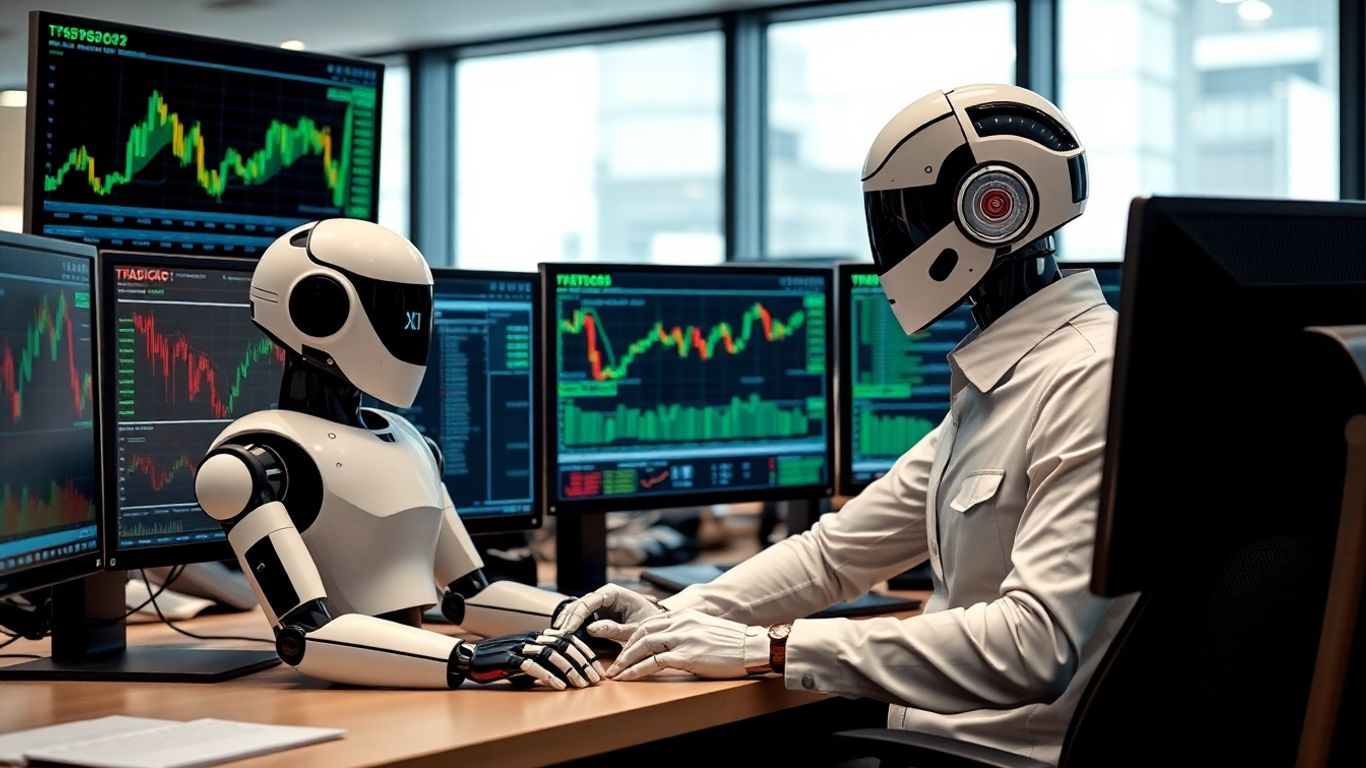
AI trading signals aren't one-size-fits-all. Customizing AI-driven systems for each asset class is what makes your strategy actually useful in the real world. Let's break down how AI signals can be tweaked for stocks, forex, cryptocurrencies, and commodities so you actually get results, not random guesses.
AI Signals for Stocks
Most folks think stock trading is all about timing, but it’s really about information. AI models process endless streams of news releases, financial reports, and price histories to spit out clear trading recommendations. Here’s how AI usually handles stock signals:
- Scans company earnings, press releases, and sector news
- Weighs technical chart patterns (moving averages, breakouts)
- Assesses market sentiment from social media and news
Instead of guessing, AI systems quickly sort through thousands of tickers, flagging interesting opportunities long before human traders could process all the data.
AI-Driven Strategies in Forex Markets
Forex trading is insanely fast. AI signal generators for currency pairs focus on:
- Analyzing price action over multiple time frames
- Watching for economic releases and global news
- Reacting to unexpected volatility from central bank actions
Traders can personalize their AI tools to focus on specific currency pairs or regions. Some even program their risk levels, so the system avoids trading when things look too wild. Popular features for AI forex signals include:
- Real-time alerts on currency pair movement
- Automatic adjustments for sudden volatility
- Integration with trading bots for rapid order execution
Cryptocurrency and Commodity AI Signal Applications
Crypto is unpredictable and trades 24/7. AI shines here by picking up on micro-trends and wild volatility that humans miss. Key points for AI crypto and commodity signals:
- Scans blockchain metrics (for crypto) and supply chain news (for commodities)
- Assesses trading volume surges and sudden order book shifts
- Accounts for global news—one tweet can flip the entire market
A quick snapshot:
- Automated signals can trade even when you’re asleep.
- AI can avoid falling for emotional FOMO (fear of missing out)
- Custom alert settings help you filter noise from real, meaningful price action
Customizing AI signal systems isn’t just about better trades. It’s about making sure those trades happen in a way that suits your goals, schedule, and appetite for risk. In 2025, smart investors will set up their tools to match exactly what they want from each asset class—no more flying blind.
Evaluating the Top AI Trading Signal Platforms in 2025
Artificial intelligence is everywhere in trading right now. Platforms promising better signals and easier automation seem to pop up every week, so it’s easy to feel lost. Finding the right AI platform isn’t about picking the one with the flashiest tech—it’s about matching your needs for speed, features, and reliability. Let’s look closely at how to make that decision in 2025.
Criteria for Choosing a Reliable AI Platform
- Proven accuracy: You want a service with a solid record for generating signals that actually work in real markets, not just in theory.
- Broad asset coverage: Look for platforms that cover the assets you trade, whether that’s stocks, forex, crypto, or commodities.
- Fast, real-time execution: Markets move quickly. Your AI tool should process data and send alerts or make trades immediately.
- User interface: If you spend more time figuring out the dashboard than making decisions, it’s not the right platform.
- Price modeling: Does the cost fit your frequency and style? Some platforms charge per use, while others want a subscription.
Don’t buy into hype—test features with demos or free trials, and always backtest before risking real money.
Comparing Popular AI Signal Providers
Here’s a handy table comparing some of the biggest names in 2025. Each has its own focus and audience:
For more context on how these AI-powered trading platforms are shaping the market, check out their impact on consistent returns and rapid analysis.
Balancing Costs, Features, and Usability
If you’re weighing options, it helps to build a quick list. Here are some tips:
- List your main must-haves: asset compatibility, execution speed, signal customizability.
- Figure out your budget before you get excited about certain tools.
- Read user reviews to find out if the software is as user-friendly as it claims.
- Don’t ignore the hidden costs—some platforms charge for extra backtests or premium data feeds.
- If possible, test two or three options in parallel for a week using demo accounts.
By running through these steps, you’ll see which platforms actually fit your routine, not just your wishlist. There’s a lot of noise out there, but with the right plan, AI can give you an edge in 2025 trading.
Integrating AI Trading Signals Into Your Investment Strategy
AI trading signal systems aren't plug-and-play magic—making them part of your actual strategy takes a smart blend of tools and human sense. They churn out data-driven signals, but you decide how to act. If you just follow AI blindly, it's easy to miss out or get burned. Here are a few ways to really work AI signals into your plan, so they help you, instead of running the show.
Combining Human Intuition with AI Recommendations
The most powerful investing combines algorithmic precision with your own judgment. AI trading signals can process huge chunks of data and spit out probabilities, but market surprises still happen. Here are some ways to bring balance to your decisions:
- Use AI alerts as a starting point, then check key fundamentals yourself before committing.
- Set up notifications for unusual signals but let your own research—like reviewing earnings or news—play a role.
- Don’t ignore the bigger picture; AI can focus too narrowly on current trends, so keep your personal goals in check.
Sometimes, the "right" trade on paper doesn’t match your risk tolerance. It's ok to pass, even if the numbers say go.
Backtesting and Continuous Optimization
Before you trust any AI trading system, historical testing—also called backtesting—is a must. This process means running the signals against large sets of old data to see how they would have performed.
- Pick a timeframe and asset class you care about.
- Feed the AI signal system loads of historical data (years of price history, news, etc).
- Review the outcomes: Was it profitable? How many big losses did it avoid (or not)?
- Use those results to tweak settings—like how sensitive the AI should be—or combine it with other non-AI rules.
A quick comparison:
Backtesting keeps you from acting on assumptions, and regular optimization makes sure your setup stays useful in changing markets. The truth is, market behavior shifts constantly, so last year’s strategies can get stale fast.
Adapting Strategies Across Market Conditions
Markets never sit still. A system that worked in a smooth market might fall apart in a volatile one. AI signals help by updating themselves with new patterns, but you have to be ready to change too. Consider:
- Regularly assessing whether your current AI setup still fits today’s market volatility.
- Switching between different AI models or adjusting settings when markets go from calm to chaotic.
- Using stop-loss and take-profit tools along with AI signals to protect against swings you can’t predict.
If you want to get more out of AI-powered approaches, check out developments in AI trading signals to see how automation can fit different investment styles.
All in all, the real value of AI trading signals comes from combining speed and objective logic with your own common sense and goals. When you find the right mix, that’s when results start to show.
Conclusion
So, that's the scoop on using AI trading signals for investing in 2025. The tech is moving fast, and honestly, it’s making things a lot easier for regular folks and pros alike. With AI, you don’t have to stare at charts all day or second-guess every move. The software crunches the numbers, spots patterns, and sends out alerts, so you can react quickly or even let it handle trades for you. Still, it’s smart to remember that no tool is perfect—markets can be unpredictable, and sometimes things just don’t go as planned. But if you’re looking to cut down on stress and make more informed choices, AI trading signals are worth a shot. Just start slow, keep learning, and see how it fits with your style. Who knows? It might just change the way you invest.
Frequently Asked Questions
What are AI trading signals?
AI trading signals are suggestions created by computer programs that use artificial intelligence. These programs study past and current market data to guess if prices will go up or down. They help traders decide when to buy or sell stocks, currencies, or other assets.
How do AI trading signals work differently from traditional methods?
Unlike old-school trading tools that use simple rules and charts, AI trading signals look at huge amounts of data very quickly. They can spot hidden patterns and trends that people might miss and can react to changes in the market almost instantly.
Can AI trading signals help me avoid emotional trading mistakes?
Yes. AI trading signals are based only on facts and numbers, not feelings. This means they help traders avoid making decisions based on fear or excitement, which can lead to mistakes.
Are AI trading signals only for expert traders?
No. Many AI trading platforms are made to be easy for anyone to use, even beginners. They often have simple charts and alerts, so you don’t need to be a tech expert to start using them.
What types of assets can I use AI trading signals for?
You can use AI trading signals for many different markets, like stocks, forex (currencies), cryptocurrencies, and commodities. The technology can be adjusted to fit whatever you want to trade.
How do I pick the right AI trading signal platform?
Look for a platform that is easy to use, fits your budget, and supports the assets you want to trade. Check if it has good reviews, real-time alerts, and strong customer support. Trying out a demo or free version can also help you decide if it’s right for you.